
Some places are not just destinations—they are beginnings.
Hidden in the quiet landscapes of Murang’a County lies Mukurwe wa Nyagathanga, a sacred ground revered by the Agikuyu people as the spiritual and ancestral birthplace of their community. To visit this shrine is not merely to tour a heritage site, but to step into a living narrative that continues to shape identity, belief, and belonging for millions of Kikuyu people today.
For a traveler seeking depth beyond scenery, Mukurwe wa Nyagathanga offers something rare: a chance to encounter history where myth, faith, and culture converge.
A Sacred Ground Rooted in Origin
Mukurwe wa Nyagathanga holds profound meaning in Kikuyu cosmology. According to oral tradition passed down through generations, this is the land where Gikuyu and Mumbi, the founding ancestors of the Kikuyu people, were settled and blessed by Ngai (Mwene Nyaga)—the Creator and Divider of the Universe.
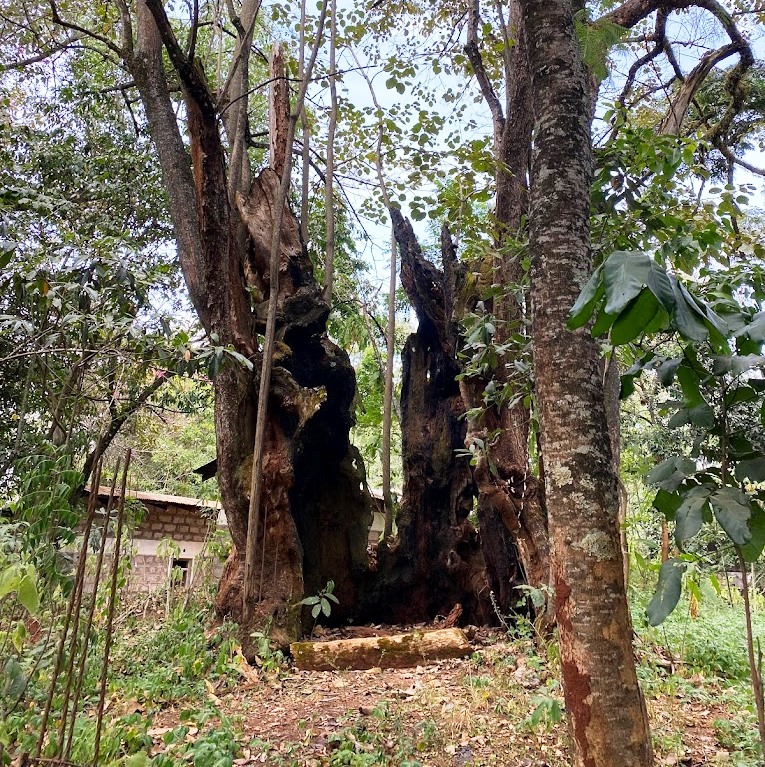
The name Mukurwe is believed to reference a revered fig tree (mugumo), a powerful symbol in Kikuyu spirituality representing continuity, strength, and divine presence. Sacred fig trees remain central in many traditional prayers and rituals, serving as natural shrines where elders commune with God.
Where the Story of a People Took Shape
Legend tells of Ngai leading Gikuyu to the heights of Kirinyaga (Mount Kenya), revealing to him a vast and fertile land bounded by natural landmarks—Mount Kenya, the Aberdares, Ngong Hills, and Ol Donyo Sabuk. At the heart of this land lay a place rich with fig trees: Mukurwe wa Nyagathanga.
Here, Gikuyu and Mumbi were blessed with daughters who would later give rise to the foundational Kikuyu clans. These clans—still recognized today—formed the social and cultural framework upon which the Kikuyu community was built. Long before written records, this structure governed relationships, marriage, leadership, and unity.
Even in modern times, many Kikuyu people can trace their lineage back to these clan origins, a reminder of how deeply Mukurwe wa Nyagathanga is woven into everyday identity.
A Living Cultural Heritage Site
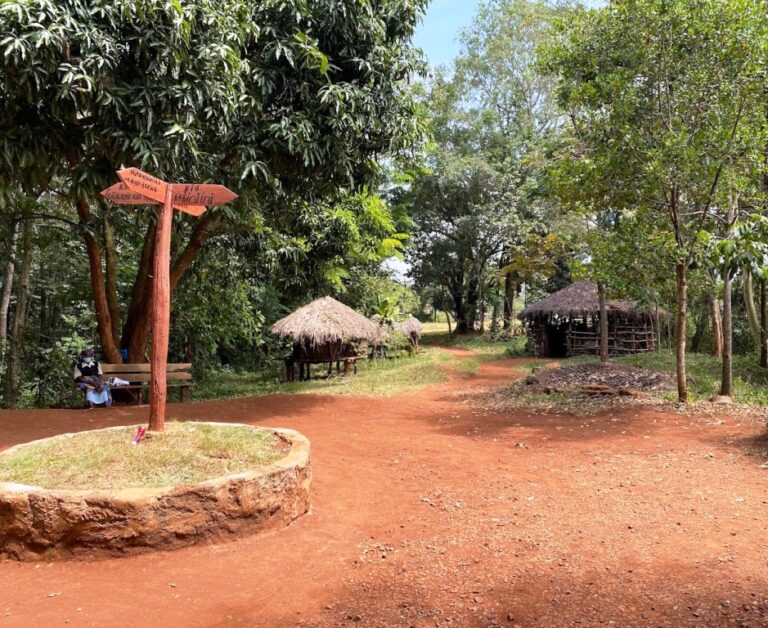
Today, Mukurwe wa Nyagathanga is more than a legendary location—it is a preserved cultural space. Visitors can explore traditional Kikuyu homesteads, learn about pre-colonial lifestyles, and understand how spirituality guided daily life through ceremonies for rain, harvest, protection, and community wellbeing.
Though quiet and often understated, the site carries a powerful stillness. It is a place of reflection, where past and present exist side by side. Elders still recognize it as sacred ground, and cultural rites continue to be held here, keeping ancestral knowledge alive.
Why Mukurwe wa Nyagathanga Matters Today
In a rapidly modernizing world, shrines like Mukurwe wa Nyagathanga play a vital role. They preserve collective memory, anchor identity, and remind us that African history did not begin with colonization—it was already rich, structured, and spiritually grounded.
For Kenya, such sites are symbols of unity and continuity. For travelers, they offer an opportunity to learn respectfully, listen deeply, and reconnect with the roots of African civilization.
Planning Your Visit
Mukurwe wa Nyagathanga is located in Gakuyu village, Murang’a County, approximately 52 km from Thika and about 12 km west of Murang’a University of Technology. The journey itself winds through fertile highlands, setting the tone for a meaningful cultural experience.
Visitors are encouraged to approach the site with respect—this is not just a tourist attraction, but a sacred place.
Some places are not just destinations—they are beginnings.
My name is Mumbi.
To carry this name as a Kikuyu woman is to carry memory in your blood. It is to walk with generations behind you, whispering stories that refuse to be forgotten.
As I speak of Mukurwe wa Nyagathanga, my voice slows, my heart bows. This is not a place I approach lightly. It is a land where origin breathes, where the soil remembers, and where time seems to kneel in reverence. Here, story is not written—it is felt.
Mumbi is not only a name; she is the mother of a people. From her came the houses, the clans, the continuity of the Agikuyu. To walk the land believed to have cradled her beginning is to understand that identity is sacred, and heritage is alive.
This journey is not about seeing.
It is about remembering.
It is about standing where the first footsteps were taken, and listening—quietly—as the land tells its truth.
Heritage, Conservation, and the Future of Mukurwe wa Nyagathanga
In recent years, Mukurwe wa Nyagathanga has emerged as a focal point in discussions around cultural heritage conservation in Murang’a County. Recognized by the County Government as a site of immense historical and spiritual value, the shrine has been identified as a potential anchor for cultural tourism. Many of its traditional structures, however, show signs of neglect, and the reduced number of cultural activities has diminished both its visibility and its role as a learning space. Community members recall a time when the shrine attracted elders, students, and visitors from beyond Kenya—visits that not only sustained cultural practice but also supported local livelihoods through small-scale trade and farm produce sales.
Efforts to rehabilitate the shrine have highlighted the delicate balance between preservation and development. While county authorities envision a carefully managed cultural and learning centre that could safeguard the shrine while opening it to future generations, elders who serve as custodians of the site have emphasized the need for deep consultation and cultural sensitivity. Their position underscores a widely shared principle in heritage conservation: that sacred sites must be protected first as living spiritual spaces, with any form of enhancement guided by tradition, consent, and respect. Encouragingly, county leaders have reiterated that no rehabilitation will proceed without the agreement of the elders, signaling an approach rooted in dialogue, shared stewardship, and long-term cultural sustainability.
A Personal Reflection — By Mumbi
As a Kikuyu woman named Mumbi, these conversations touch me deeply. Mukurwe wa Nyagathanga is not just a heritage site I write about—it is a place that carries my name, my ancestry, and my responsibility. I believe preservation does not mean freezing culture in time, nor does development have to mean loss of sanctity. What matters is intention, respect, and listening to those who have guarded this land for generations. If restored with care and wisdom, Mukurwe wa Nyagathanga can remain a sacred space while also becoming a place where young people learn who they are, where visitors understand our origins, and where culture continues to live—not as a performance, but as a truth.
At Travella BeeNomad, we believe travel should educate, heal, and reconnect us with our roots. Mukurwe wa Nyagathanga is one of those rare places that invites you to slow down, listen to the land, and remember where stories begin.